

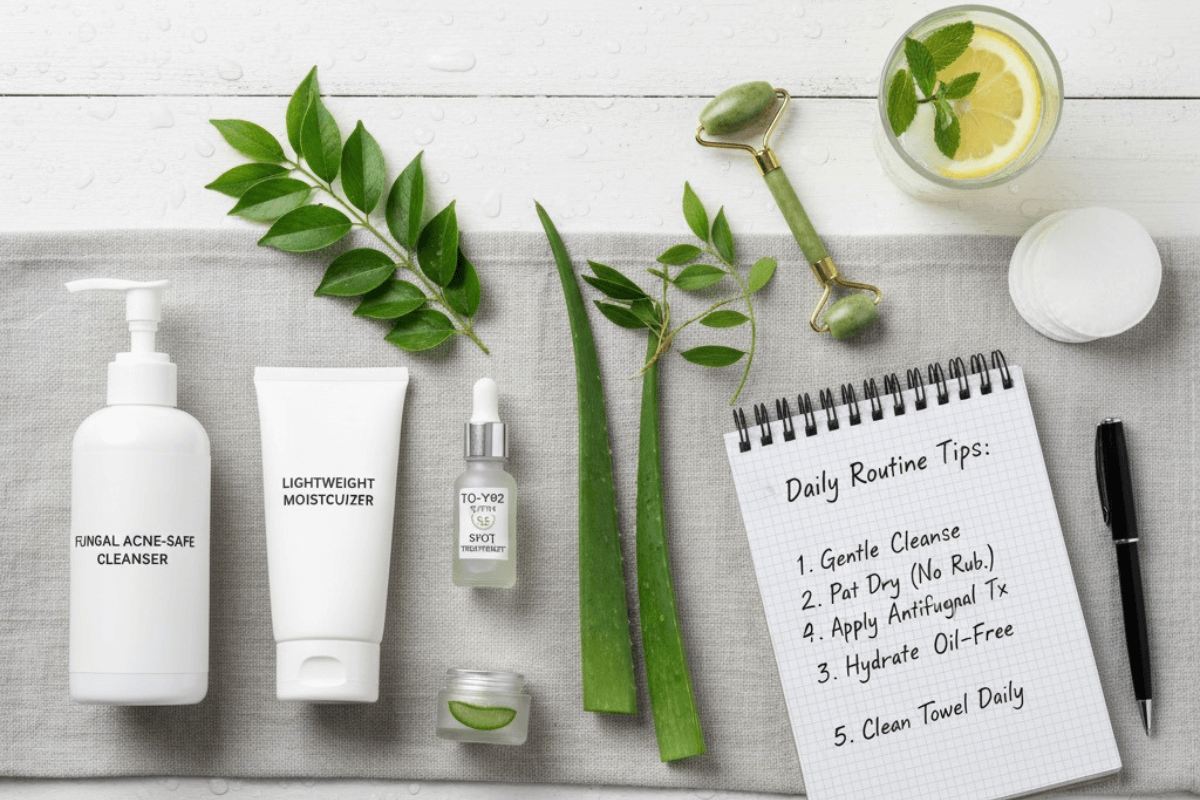
Fungal acne, medically known as Malassezia folliculitis (or sometimes Pityrosporum folliculitis), is a frustrating and often misdiagnosed skin condition. Unlike common acne, which is caused by bacteria, this condition is the result of an overgrowth of the yeast (Malassezia) that naturally lives on your skin. The good news is that with the right approach to daily care for fungus caused acnes prone skin, you can take back control of your complexion. The key lies in strategic product choices and consistent daily skincare habits for acnes that starve the yeast and soothe your skin.
Decoding the Fungal Acne Daily Skincare Routine
The best skincare for fungal acne prone skin is remarkably different from a routine designed for traditional breakouts. The yeast thrives on certain ingredients—particularly fatty acids found in many oils, esters, and fermented ingredients—so a minimalist, targeted routine is essential. Think of your regimen as a gentle, consistent approach to treating the root cause.
The Foundation: How to Wash Face with Fungal caused Acne
The cleansing step is critical. You need to gently remove impurities and excess sebum without stripping the skin or, more importantly, without introducing “food” for the Malassezia yeast.
- Morning Cleanse: A simple rinse with cool or lukewarm water is often enough, especially if your skin is dry or sensitive. If you prefer a full cleanse, use a gentle, acne safe cleanser that is sulfate-free and non-comedogenic.
- Evening Cleanse: This is a non-negotiable step to remove sweat, dirt, and pollution. If you wear makeup or sunscreen, start with a fungal acne-safe micellar water or a cleansing oil based on safe ingredients like mineral oil or squalane. Follow up with your best cleanser for fungus caused acne prone skin, using lukewarm water. Remember, when you how to wash face with fungal acne, always pat your skin dry with a clean, soft towel—never rub.
Step-by-Step Treatment: Fungal Acne Treatment at Home Daily
Integrating an antifungal treatment is the heart of any effective fungal caused acne skincare products routine. Many effective treatments can be done right at home.
- Antifungal Cleansers/Masks (The Power Wash): Products containing key antifungal ingredients like Zinc Pyrithione or Selenium Sulfide (often found in anti-dandruff shampoos) can be game-changers. For a targeted treatment, apply the product to affected areas on your face or body, let it sit for 5-10 minutes (allowing enough contact time for the active ingredients to work), and then rinse thoroughly. Use this approach a few times a week.
- Targeted Topicals: Ingredients like Azelaic Acid and Salicylic Acid (BHA) are excellent additions. Azelaic acid has dual antifungal and anti-inflammatory properties, while BHA provides gentle exfoliation, which is vital to clear the congested hair follicles associated with Malassezia folliculitis. Apply these treatments in the evening, after cleansing.
The Essential Step: Fungal Acne Safe Moisturizers
Treatments can often be drying, making proper hydration crucial for a healthy skin barrier. However, most traditional moisturizers are not fungal acne safe.
- Choose Wisely: The yeast feeds on many common moisturizing ingredients. Look for lightweight, oil-free, non-comedogenic formulas that are explicitly “Malassezia-safe.” The best skincare for fungal acne prone skin prioritizes ingredients that are known not to feed the yeast, such as Squalane (derived from sugarcane, not Olive Oil), Caprylic/Capric Triglyceride, Glycerin, Urea, and Hyaluronic Acid.
- Hydration is Healing: Applying a fungal acne safe moisturizer morning and night helps to calm inflammation and repair your skin barrier, which is essential for long-term clarity.
Beyond Skincare: Natural Remedies and Prevention Tips
Achieving clear skin requires more than just a surface treatment; it requires adjusting your environment and lifestyle. Integrating natural remedies for fungal acne care and smart lifestyle choices supports the efforts of your daily care for fungal acne prone skin.
Environmental and Lifestyle Habits
- Manage Sweat and Heat: Since the yeast thrives in warm, moist environments, daily skincare habits for fungal acne include showering immediately after sweating (especially post-workout) and using a separate antifungal body wash on affected areas.
- Clothing Choices: Wear loose-fitting, breathable fabrics like cotton to prevent heat and moisture from being trapped against the skin.
- Laundry Care: Change and wash gym clothes and pillowcases frequently.
The Role of Natural Remedies
While a gentle, minimalist routine is the most critical natural approach, specific ingredients are beneficial for how to care for fungal acne naturally:
- Tea Tree Oil: Known for its potent antifungal properties, a properly diluted tea tree oil can be dabbed onto active breakouts. Crucially, never use it undiluted, as it can cause severe irritation.
- Green Tea and Centella Asiatica: These ingredients are known for their anti-inflammatory and soothing properties, helping to calm the redness and irritation associated with the condition.
By adopting a strict, yeast-starving skincare routine for Malassezia folliculitis, prioritizing fungal acne safe moisturizers, and committing to simple preventative daily care for fungal acne prone skin, you create an environment where the yeast cannot thrive. Consistency and patience are your most powerful tools on the path to clear, calm skin.
Frequently Asked Questions (FAQs) About Fungal Acne Daily Care
Here are answers to the most common questions about daily care for fungal acne prone skin.
Q1: What is the best daily routine for fungal acne prone skin?
A: The best fungal acne daily skincare routine is simple, gentle, and focuses on starving the Malassezia yeast while treating existing bumps.
| Step | Morning Focus | Evening Focus |
| Cleanse | Gentle, fungal acne-safe cleanser or water rinse. | Fungal acne-safe cleanser (double cleanse if wearing makeup/SPF). |
| Treat | Lightweight, calming serum (e.g., Niacinamide or Hyaluronic Acid). | Antifungal treatment (Zinc Pyrithione wash, Azelaic Acid, or Salicylic Acid). |
| Hydrate | Fungal acne safe moisturizer (lightweight gel). | Fungal acne safe moisturizer (can be slightly richer). |
| Protect | Fungal acne safe SPF 30+ (non-comedogenic). | N/A |
Key takeaway: Less is more. Consistency is critical, especially with the antifungal treatment step.
Q2: Which moisturizer is safe for fungal acne?
A: A safe moisturizer is one that does not contain ingredients the Malassezia yeast feeds on. Look for products that are oil-free, non-comedogenic, and labeled “Malassezia-safe.”
Safe Ingredients to Look For:
- Squalane (derived from sugarcane, not olive oil)
- Caprylic/Capric Triglyceride
- Glycerin
- Hyaluronic Acid
- Urea
- Niacinamide
Avoid rich, occlusive creams and any moisturizer containing esters (ingredients ending in ‘-ate’) or most plant-derived oils (like coconut, olive, or argan oil).
Q3: Can sunscreen worsen fungal acne?
A: Yes, many sunscreens can worsen fungal acne because they contain esters, emulsifiers (like Polysorbates), and certain oils that feed the yeast.
Prevention Tips:
- Always choose sunscreens labeled oil-free and non-comedogenic.
- Mineral sunscreens (those using Zinc Oxide or Titanium Dioxide) are often the safest bet, but you must check the other ingredients in the formula.
- Make sure your sunscreen is integrated into your daily care for fungal acne prone skin by using a fungal acne-safe cleanser in the evening to remove it completely.
Q4: How often should I exfoliate with fungal acne?
A: Exfoliation is beneficial because it helps clear dead skin cells and debris that clog the hair follicles, but you must be gentle to avoid irritating the skin.
- Type: Chemical exfoliants are generally better than physical scrubs. Salicylic Acid (BHA) is a great choice as it also has mild antifungal properties and clears pores.
- Frequency: Start by using a gentle exfoliant (like Salicylic Acid or Azelaic Acid) 2 to 3 times per week in your evening routine. If your skin tolerates it well, you can increase the frequency, but stop immediately if you notice increased redness or irritation.
Q5: What ingredients should I avoid with fungal acne?
A: To successfully manage your fungal acne treatment at home daily, you must avoid ingredients that feed the Malassezia yeast.
| Ingredient Category | Why to Avoid | Examples to Spot on Labels |
| Fatty Acids/Oils | Yeast feeds on these, causing overgrowth. | Coconut oil, Olive oil, Lanolin, Linoleic Acid, Oleic Acid. |
| Esters | Derivatives of fatty acids; very common in skincare. | Ingredients ending in -ate (e.g., Isopropyl Palmitate, Glyceryl Stearate). |
| Polysorbates | Common emulsifiers that feed the yeast. | Polysorbate-20, Polysorbate-80. |
| Fermented Ingredients | Can contain yeast byproducts. | Fermented extracts (e.g., Galactomyces, Rice Ferment). |


