

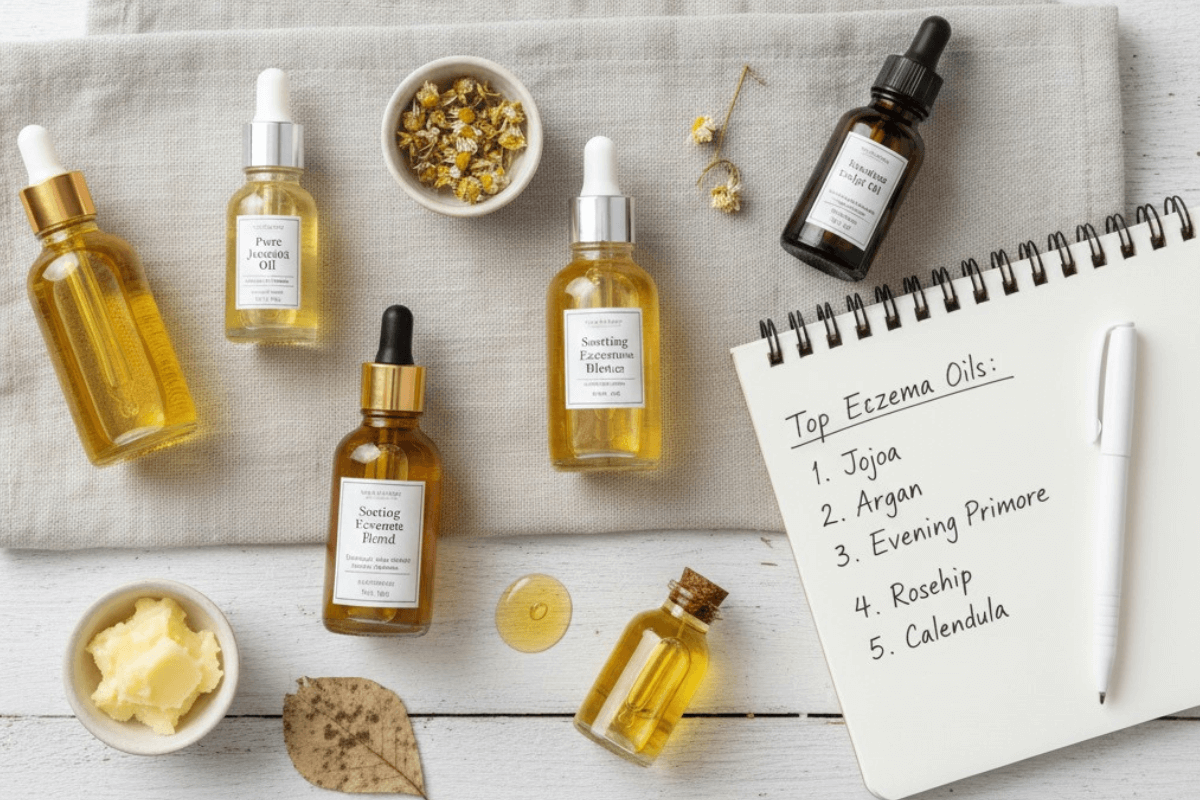
Eczema, a common skin condition characterized by dry, itchy, inflamed patches, is often caused by a compromised skin barrier. For those seeking natural relief for eczema, applying the right oils can be a powerful strategy. Moisturizing oils for eczema skin not only lock in moisture but also provide essential fatty acids and anti-inflammatory compounds that help repair the skin’s protective layer and soothe irritation.
Here is a detailed guide to the best oils for eczema-prone skin, focusing on organic oils for eczema treatment and how to use them safely.
The Power of Carrier Oils for Eczema Skin
Carrier oils, derived from the fatty parts of a plant (like seeds, kernels, or nuts), are the foundation of natural eczema skin care oils. They serve as deeply moisturizing emollients and should be the primary choice for application, especially during a flare-up.
1. Virgin Coconut Oil
Coconut oil is arguably one of the most popular and effective oils to treat eczema naturally. It is rich in lauric acid, a medium-chain fatty acid that possesses antimicrobial and anti-inflammatory properties.
- Key Benefits: It provides deep hydration, helps reduce the presence of Staphylococcus aureus bacteria (which often colonizes the skin of eczema sufferers), and supports the restoration of the skin barrier.
- Application Tip: Always choose virgin or cold-pressed coconut oil for the purest, most effective remedy. Apply it generously to damp skin right after a bath or shower to seal in moisture.
2. Sunflower Seed Oil
Sunflower oil is an excellent source of linoleic acid, which is crucial for healthy skin barrier function. Research suggests it can significantly help improve a damaged barrier.
- Key Benefits: It is one of the best plant oils for eczema skin due to its ability to prevent water loss and its anti-inflammatory effects, which can help calm the rash and reduce the urge to scratch.
- Application Tip: Use a high-oleic, organic, cold-pressed variety. Apply it directly to the affected areas, or use it as a substitute for harsher soaps in the bath.
3. Jojoba Oil
Jojoba oil is unique among natural oils for eczema relief because it is structurally similar to human sebum (the skin’s natural oil).
- Key Benefits: It is non-comedogenic and extremely well-tolerated by sensitive skin. It provides lasting moisture, helps balance oil production, and is excellent for use on the face and sensitive areas.
- Note: Jojoba oil is also one of the best carrier oils for eczema-prone skin, for diluting potent essential oils.
4. Borage Seed Oil (or Evening Primrose Oil)
These oils are distinguished by their high content of Gamma Linolenic Acid (GLA), an Omega-6 fatty acid.
- Key Benefits: GLA has been studied for its strong anti-inflammatory effects. While studies on topical application are mixed, many individuals find that these oils can be highly soothing oils for itchy eczema skin and may help manage eczema flare-ups.
- Usage: They can be applied topically or taken as a supplement (consult a healthcare provider first).
Integrating Essential Oils for Targeted Relief
While carrier oils provide deep moisturization, certain essential oils for eczema prone skin offer concentrated, targeted relief from itching and inflammation. Crucially, essential oils MUST always be diluted in a carrier oil before applying to the skin. People with eczema should start with a very low dilution (0.5% to 1%) and perform a patch test first, as the skin can be highly reactive.
| Essential Oil | Primary Benefit for Eczema | Notes on Use |
| Lavender Oil | Anti-inflammatory, calming, and promotes wound healing. | Helps reduce redness and is a gentle, popular choice for soothing skin. Also helps with sleep/stress, a common eczema trigger. |
| German Chamomile | Rich in chamazulene, a potent anti-inflammatory compound. | Excellent for quickly calming the intense redness and inflammation associated with a flare-up. |
| Tea Tree Oil | Antimicrobial and antiseptic. | Helps prevent infection in cracked or open eczema lesions. Must be highly diluted as it can be irritating. |
| Frankincense Oil | Astringent, regenerative, and anti-inflammatory. | Supports skin cell regeneration and helps improve the appearance of scarred or damaged skin. |
Export to Sheets
How to Use Oils for Eczema Treatment
To get the most out of these best natural remedies for eczema prone skin, follow a consistent and mindful routine:
- The Damp Skin Rule: Apply your chosen carrier oil within three minutes of getting out of the shower or bath while your skin is still damp. This traps the water on the surface, maximizing hydration.
- Patch Test Everything: Before applying a new oil (especially an essential oil blend) to a large area, apply a dime-sized amount to a small patch of clear skin for 24 hours to check for a reaction.
- Dilution is Key: For an essential oil blend, mix 1 to 2 drops of essential oil per teaspoon of a carrier oil (like jojoba or coconut oil) for sensitive, eczema-prone skin.
- Organic is Preferred: Opting for organic oils for eczema treatment reduces the risk of applying pesticides or other chemicals that could trigger a reaction. Look for “cold-pressed” or “virgin” labels, which indicate minimal processing.
By carefully selecting and properly applying these best oils for eczema-prone skin, you can effectively reinforce your skin’s natural barrier, drastically reduce dryness, and find daily comfort from chronic itching and inflammation.
Frequently Asked Questions (FAQ)
Here are answers to common questions about using oils to manage eczema, based on the remedies and advice in this article:
1. Which oil is best for eczema-prone skin?
There is no single “best” oil, as reactions vary, but Virgin Coconut Oil is one of the most popular and effective choices. It provides deep hydration and has antimicrobial properties to help fight bacteria often present on eczema-affected skin. Sunflower Seed Oil is also highly recommended because it is rich in linoleic acid, which is essential for repairing the skin’s compromised moisture barrier.
2. Is coconut oil good for eczema?
Yes, coconut oil is very good for eczema. Virgin Coconut Oil is recommended due to its high content of lauric acid, which gives it antimicrobial and anti-inflammatory benefits. It is a powerful moisturizer that helps prevent water loss and supports the restoration of the skin’s protective layer.
3. Can jojoba oil help with eczema?
Yes, jojoba oil can help with eczema. It is structurally similar to the natural sebum produced by human skin, making it extremely well-tolerated and non-comedogenic. It provides lasting moisture, helps balance the skin’s oil production, and is an excellent option for use on the face and other sensitive areas.
4. Does tea tree oil work for eczema?
Tea tree oil can work for eczema, but only for targeted, specific relief, and must be used with caution. Its primary benefit is its strong antimicrobial and antiseptic properties, which can help prevent infection in cracked or open eczema lesions. It is crucial to remember that it is an essential oil and must be highly diluted in a carrier oil (like jojoba or coconut oil) before application, as its potency can otherwise irritate eczema-prone skin.
5. What natural oil is best for dry, itchy skin?
For deeply dry and itchy eczema skin, carrier oils with a high content of Gamma Linolenic Acid (GLA) are often the most soothing. Borage Seed Oil and Evening Primrose Oil are particularly valued for their strong anti-inflammatory effects that can help calm the intense itching and manage flare-ups.


