

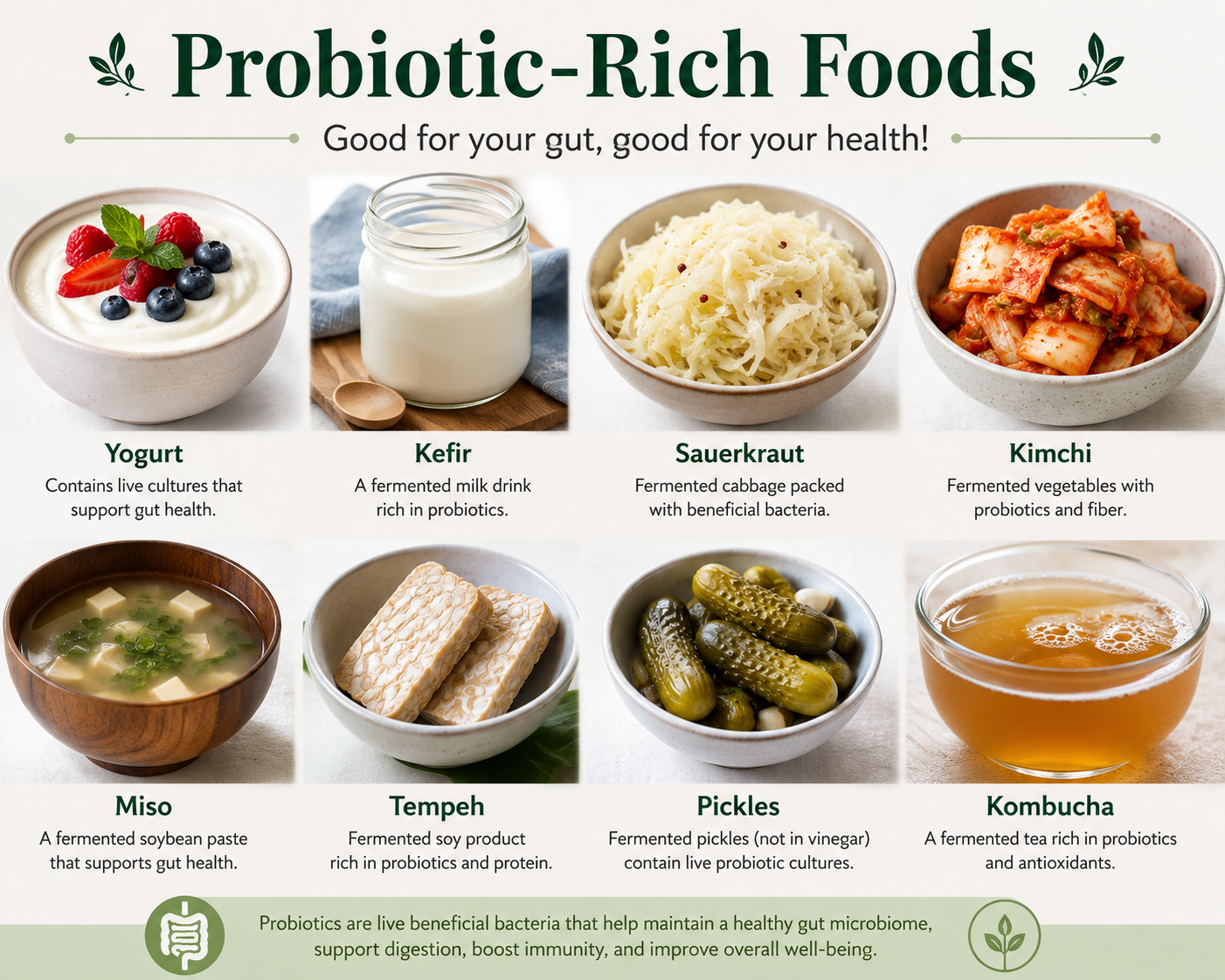
Great skin doesn’t start in a serum. It starts in your gut and with the best probiotic-rich foods.
It sounds like a bold claim, but the science behind it is growing stronger every year. The bacteria living in your digestive system — your gut microbiome — communicate directly with your skin through a pathway scientists call the gut-skin axis. When your gut is balanced and thriving, it shows on your face. When it’s out of whack, your skin is often the first place to show the fallout.
The most natural way to support your gut microbiome is through probiotic-rich foods. Here’s what to eat, why it works, and how to make it part of your daily routine.
Read More: DIY Yoghurt Masks for healthier skin
The Gut-Skin Connection, Explained Simply
Your gut is home to trillions of bacteria, fungi, and other microorganisms. When these are in balance, they support your immune system, reduce inflammation, and help your body absorb the nutrients it needs to build healthy skin cells.
When the balance is disrupted — by a poor diet, stress, antibiotics, or illness — inflammation increases throughout the body. And since the skin is your largest organ, it responds quickly. Research has linked gut imbalance to a range of skin concerns including acne, eczema, rosacea, psoriasis, and dullness.
Probiotics are live beneficial bacteria that help restore and maintain that balance. You can take them as supplements, but getting them through food is often more effective because the beneficial bacteria arrive alongside fiber and nutrients that help them survive and thrive.
The Best Probiotic-Rich Foods for Your Skin
1. Yogurt
Plain, unsweetened yogurt is one of the most accessible sources of probiotics available. It’s rich in Lactobacillus strains — the same bacteria commonly used in probiotic research linked to reduced acne and improved skin hydration.
Look for labels that say “live and active cultures.” Avoid flavored yogurts, which are often loaded with sugar — sugar feeds harmful bacteria and increases inflammation, which is the opposite of what you want.
How to use it: Have a bowl with berries and ground flaxseed in the morning for a skin-friendly breakfast that covers probiotics, antioxidants, and omega-3s in one go.
2. Kefir
Kefir is a fermented milk drink that contains significantly more probiotic strains than yogurt — sometimes up to 30 different beneficial bacteria. It’s tangy, slightly fizzy, and incredibly effective at supporting gut health.
Studies have found that regular kefir consumption is associated with reduced skin inflammation and improved hydration. It’s also a good source of biotin and B vitamins, which are essential for healthy skin cell production.
How to use it: Blend kefir into smoothies, use it as a base for salad dressings, or simply drink a small glass in the morning.
3. Kimchi
Kimchi — the Korean staple made from fermented cabbage and vegetables — is one of the richest plant-based sources of probiotics in the world. It’s packed with Lactobacillus bacteria and is also high in vitamins A and C, both of which support collagen production and skin repair.
The fermentation process also creates short-chain fatty acids that feed the beneficial bacteria already living in your gut — meaning kimchi doesn’t just add good bacteria, it feeds the ones you already have.
How to use it: Add it as a side dish, stir it into rice, or fold it into scrambled eggs. Start with small amounts if your stomach isn’t used to fermented foods.
4. Sauerkraut Similar to kimchi, sauerkraut is fermented cabbage that’s rich in probiotics and fiber. It’s less spicy, making it easier for those with sensitive stomachs to tolerate. It also contains vitamin K2, which plays a role in skin elasticity and helps prevent premature aging.
One important note: most store-bought sauerkraut is pasteurized, which kills the live bacteria. Look for raw, refrigerated sauerkraut for the full probiotic benefit.
5. Miso
Miso is a Japanese fermented paste made from soybeans. It contains a variety of beneficial bacteria and is also rich in zinc — one of the most important minerals for skin health, known to reduce acne-causing inflammation and support wound healing.
How to use it: Stir a spoonful into warm (not boiling) water for a simple miso soup, or use it as a marinade for fish and vegetables. Heat destroys live bacteria, so keep the water temperature below 70°C.
6. Kombucha
Kombucha is a fermented tea that has gained a cult following in recent years — and with good reason. It contains organic acids and beneficial bacteria that support gut health, along with B vitamins and antioxidants.
If you’re new to fermented drinks, start with a small amount — around 100ml a day — and increase gradually. Some people experience bloating when they first introduce kombucha.
7. Tempeh
Tempeh is a fermented soybean product with a firm, nutty texture that works brilliantly as a plant-based protein. It’s rich in probiotics and also contains riboflavin (vitamin B2), which helps maintain healthy skin and reduces oxidative stress that leads to premature aging.
Tips for Getting the Most Out of Probiotic Foods
Getting probiotics in through food is just the start. To make them work harder:
- Pair them with prebiotic foods.
Probiotics need fiber to survive. Eat probiotic foods alongside garlic, onions, bananas, oats, and asparagus — these are all prebiotic foods that feed beneficial bacteria. - Stay consistent
Gut health improves with regular, daily consumption rather than occasional large doses. - Reduce sugar and ultra-processed foods
These feed harmful bacteria and can quickly undo the benefits of probiotics. - Stay hydrated
Water helps transport beneficial bacteria through your digestive system and supports every skin function from the inside out.
How Long Until You See Results on Your Skin?
Gut health improvements take time to show up on your skin. Most people notice a change — less breakouts, calmer redness, or a general glow—after four to eight weeks of consistent dietary changes. The effect is gradual and cumulative, but it’s also lasting, which is more than most serums can promise.
Start with one or two probiotic foods and build from there. Your gut — and your skin — will thank you.


